What should a retail store manager expect from a security officer on their first shift

What should you expect from a security officer on the first day in your store?
You should expect the officer to arrive prepared, introduce themselves properly, confirm the brief, understand how to reach the duty manager and start observing the store without slowing trade. The first shift tests readiness, judgement and communication, but store-specific knowledge still needs a manager briefing.

The first shift should prove preparation quickly
At opening time or during a shift change, your store is already moving. Deliveries may be due, queues may be forming and the duty manager has no spare time to manage a security officer who has arrived unsure of the job.
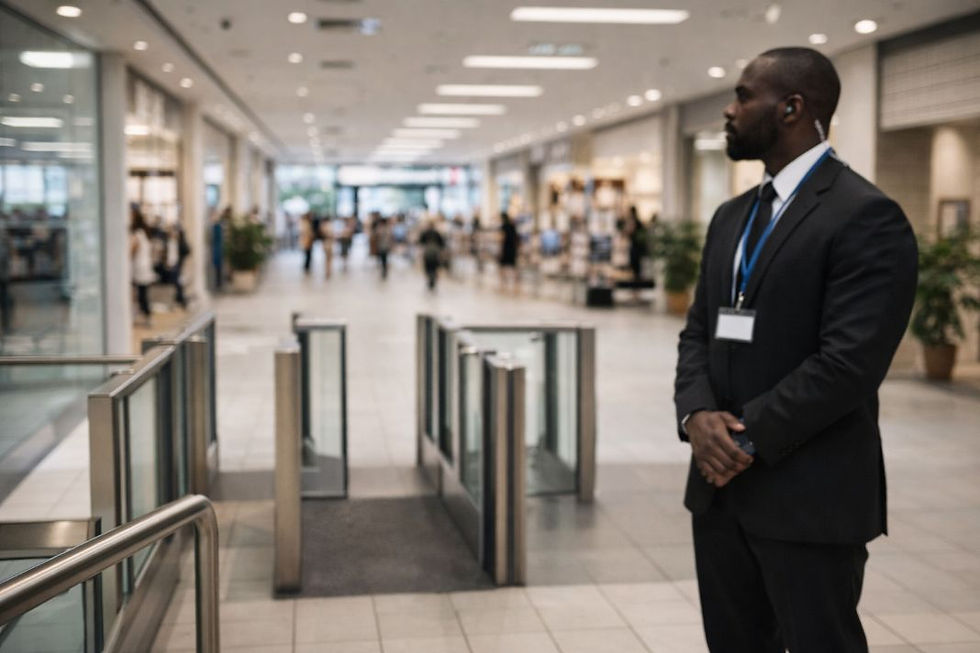
A retail security officer first shift is a practical test. Arrival in uniform matters less than evidence of preparation: punctuality, a clear introduction, interest in the site instructions and the ability to take a brief without turning it into a long meeting. A competent officer will ask who is in charge, how communication works and what the immediate priorities are.
Judging the officer fairly matters. You can expect professional conduct straight away, including calm communication, visible presence and customer-facing behaviour that fits the store. You cannot expect them to know repeat offenders, quiet blind spots or store-specific routines before anyone has explained them.
Early warning signs are plain enough. Poor punctuality, vague answers, weak eye contact with the duty manager, no interest in the assignment instructions or uncertainty about reporting all point to a shift that may need closer management than it should. A good first shift reduces your workload. It does not add another person for you to supervise.
The first 30 minutes need a clear handover
The first half-hour usually reveals whether the shift has been prepared properly. A structured handover gives the officer enough information to act with purpose before the store gets busier.
Arrival and manager introduction. The officer should introduce themselves to the duty manager or agreed contact, confirm the shift times and make clear who they report to during the day.
Role and post expectations. A door position, shop-floor patrol or flexible pattern should be agreed at the start. Guesswork creates gaps, especially in busy Central London retail sites.
Visible licence check where the role requires it. The Security Industry Authority (SIA) says that in a retail outlet or shopping centre, a front line SIA licence may be required where contracted work involves licensable activity. A front line licence holder must wear the licence where it can be seen while carrying out designated licensable activity, unless an exception applies. Covert store detective work is treated differently, so the same display expectation does not apply in every retail role.
Radio, phone or agreed contact method. The officer needs a working route to the duty manager. If the store uses radio, the officer should know the channel, call sign and when to use it.
Site walk-through and risk points. The handover should cover entrances, fitting rooms, stock-risk areas, delivery points, staff-only access and any place where the officer should not go without permission.
Assignment instructions and escalation route. Site instructions translate the contract into daily conduct. They should tell the officer what to report, when to involve the duty manager and how police escalation is handled.
First patrol or door-position agreement. The officer should leave the handover with a defined starting position. If the plan changes, the duty manager should know why.
Fahrenheit Security treats deployment and briefing as part of retail guarding, because a shift can fail before the first incident if the officer arrives without a clear route into the store’s working routine.
The store brief turns presence into protection
A uniformed officer can stand in the right place and still miss the real risk if the brief is weak. Retail security guard duties only make sense once they connect with the way your store actually trades.
Your brief does not need to be long. It needs to be specific. Tell the officer where high-risk stock sits, which entrances need attention, where fitting-room issues arise and how you prefer sensitive customer situations to be handled. If closed-circuit television (CCTV) duties form part of the role, explain the limits of that task in plain terms and point the officer back to the assignment instructions.
Central London and wider Greater London stores often place extra pressure on judgement. A flagship store, a high-footfall site or a premium retail space needs a security officer who can deter loss without cutting across the service tone. The officer’s manner matters as much as their position.
Good officers ask practical questions early. They want to know what has caused problems before, which risks need immediate attention and how the duty manager wants updates. Fahrenheit Security places particular weight on this site-specific adjustment in retail environments, because the same guarding style will not suit every shop floor.
Store-specific judgement develops with time. Professional curiosity should appear on shift one.

Why customer-facing security needs balance
The common debate is door or floor. Neither position is automatically right for the whole shift, because visibility, coverage and customer service all carry trade-offs.
Door presence works well when the entrance is a pressure point or when immediate visibility matters. Shop-floor patrol helps when the risk sits deeper in the store, such as around fitting rooms or high-value stock. A flexible pattern often works best on a first shift, provided the officer updates the duty manager before changing approach.
Customer-facing security officer standards are easy to judge if you watch the basics. The officer should remain alert without staring down customers, move with purpose and communicate discreetly with store colleagues. Heavy-handed behaviour can damage the trading environment even when the officer means well.
Visible retail security is useful only when it is connected to the store’s layout and standards. A guard who dominates the doorway may look busy, yet the better officer may be the one who changes position at the right moment and tells the manager why.
The real test is controlled incident handling
Incidents expose the quality of the briefing and the officer’s judgement. Suspected theft, aggressive customers and refusal to leave all test whether the officer can steady the situation without creating avoidable conflict.
Aggression and abuse need a safety route
Abuse, threats and intimidation belong in the store’s wider safety picture. The Health and Safety Executive says retail employers are required by law to carry out a risk assessment for work-related violence, and it defines work-related violence as abuse, threats or assault linked to work.
On a first shift, the officer should communicate early rather than wait for a situation to deteriorate. The duty manager needs to know what has happened, what support is needed and whether the agreed escalation route is being followed. Calm control is worth far more than a dramatic intervention.
Suspected theft needs boundaries
Suspected theft calls for observation, deterrence, reporting and escalation in line with site instructions. A first-shift officer should not improvise around searches, detention or police contact. Those decisions need agreed boundaries, because the wrong move can create a bigger problem than the original incident.
Good retail security incident response is disciplined. The officer records what they saw, tells the right person and keeps the store’s position clear. Where police escalation is required, the route should already be known, not debated on the shop floor.
The shift review should be specific
End-of-shift review is where a first day becomes useful for future cover. The manager should expect incident reports to be completed, risk areas to be noted and any unresolved concerns to be passed on clearly.
A useful review also tests communication quality. Did the officer update at the right moments? Did the position plan work? Did the officer fit the customer-facing standard of the store? Management oversight matters here, because Fahrenheit Security uses that feedback loop to keep retail cover aligned with the site rather than treating each shift as a one-off attendance.
The sharper question is not whether the officer looked like security on day one. The better test is whether the store became easier to manage once they arrived.

Common questions about retail security first shifts
Does a contracted retail security officer need a front line SIA licence?
A front line SIA licence may be required where contracted retail security work involves licensable activity. The exact position depends on the role, the activity and the premises.
Does a retail security officer have to show an SIA badge?
A front line SIA licence holder must wear the licence where it can be seen while carrying out designated licensable activity, unless an exception applies. Covert store detective work is one example where the licence does not have to be worn visibly, although it must still be carried and produced where required.
Should a first-shift officer stand at the entrance all day?
A fixed entrance position can work when the doorway is the main risk point, but many stores need a mix of entrance visibility and shop-floor coverage. The duty manager and officer should agree the starting position and review it during the shift.
What should a manager tell a retail security officer on the first day?
The manager should explain the store’s risk areas, reporting expectations, customer-facing standards and escalation route. The officer also needs to know how to reach the duty manager quickly.
What makes a first-shift incident report useful?
A useful incident report states what happened, where it happened, who was informed and what action followed. It should leave the manager with a clear record, not a vague note that needs further explanation.
This is general information, not professional advice.


Comments