What Are the Biggest Corporate Security Challenges in London Office Buildings?

Why is corporate security in London office buildings more complex than it seems?
London office buildings often appear secure, with visible systems and professional teams in place. However, beneath the surface, risks continue to evolve. Open-plan designs, hybrid working patterns, and shared building access have significantly altered how threats emerge and operate.
What may look like a controlled environment could in fact lack real accountability or a culture of awareness. Security must go beyond the facilities team and become a shared operational responsibility. As corporate security challenges grow, senior decision-makers need to examine both visible and hidden risks more closely.

Why do unauthorised access risks go unnoticed in London offices?
Professional office environments tend to encourage trust. Individuals dressed in business attire and carrying a laptop bag often move about unnoticed. This effect is even more pronounced in shared buildings, where entrances are communal.
Although receptions may appear polished, they frequently operate with limited oversight. Visitors who follow others through doors or lifts (a practice known as tailgating) often go unchallenged. Permissions granted to contractors frequently extend beyond the necessary period without being revoked.
Because no incident appears to have occurred, many teams assume that their security measures are effective. This assumption obscures the need for firmer controls. Effective access management requires routine checks, a culture of vigilance, and clearly defined procedures. Visual authority and robust access control protocols must be prioritised.
How does human behaviour weaken office security systems?
Access controls are only as effective as the behaviours that support them. Acts of social politeness, such as holding a door open or avoiding uncomfortable confrontations, can undermine security systems.
Tailgating is typically unintentional. Most staff members are simply trying to be courteous or efficient. Nevertheless, in the absence of a culture that reinforces security-minded behaviour, even well-meaning actions introduce avoidable risks.
The issue does not always stem from inadequate systems but rather from insufficient reinforcement. People must feel confident applying rules and procedures. Without that confidence, routine behaviour can bypass the most robust security infrastructure. Integrating behavioural expectations into access control planning is essential.
What makes shared buildings more vulnerable to security issues?
In buildings occupied by multiple tenants, security responsibilities are frequently unclear. Areas such as lobbies and lifts are shared spaces, and security may fall under the control of external property management companies.
When an incident occurs, confusion about who should respond is common. Landlords are typically responsible for the perimeter, while tenants oversee their individual offices. However, shared areas remain a grey zone. These blurred boundaries often result in delayed or inconsistent responses.
Without defined ownership and consistent protocols, even routine issues can escalate. Effective commercial building security requires clearly assigned responsibilities and well-structured communication between all parties involved.
Are internal threats more common than companies admit?
Internal risks remain among the most damaging and frequently overlooked. Addressing these risks is often avoided due to the discomfort they bring, but this reluctance leaves organisations exposed.
Incidents may involve a staff member whose access credentials were never deactivated, or a contractor who retained entry rights long after their assignment ended. Although such occurrences rarely attract media attention, they can cause significant operational harm.
Tackling internal threats requires consistent enforcement of access policies and a willingness to audit regularly. Trust and caution must coexist to build resilient systems. Managing insider threats effectively begins with clear processes and continual vigilance.

How has hybrid work altered office security expectations?
Hybrid work patterns have introduced inconsistent occupancy levels. Some days are heavily staffed, while others leave floors nearly vacant. These changes affect how and when security vulnerabilities emerge.
Reduced footfall results in fewer people available to notice unusual activity. Systems designed for predictable usage often fail to adapt to irregular schedules. Quiet areas may create a false sense of safety.
Today’s office security strategy must account for this variability. Monitoring systems must be adaptable, escalation paths clearly defined, and expectations communicated to all staff. A quiet office does not imply a safe one. Modern office security challenges are often less visible, but no less serious.
Why are reception teams under strain?
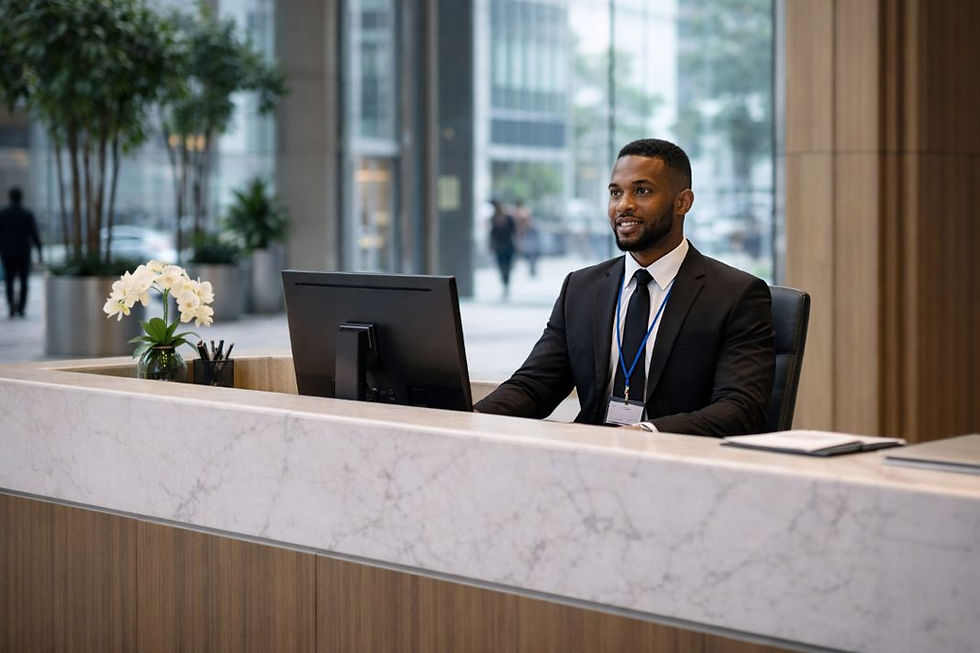
Receptionists often juggle the dual role of hospitality and security enforcement. They are expected to greet visitors warmly while also managing sign-in processes and responding to suspicious behaviour.
This role duality can be difficult to manage. When expectations are unclear or managerial support is lacking, receptionists may hesitate to take action. They may be unsure of when it is appropriate to escalate or challenge a visitor.
The emotional burden and security responsibilities placed on reception teams require greater recognition. These teams need access to training, escalation protocols, and consistent backing from senior leaders. Strengthening front-of-house security processes is key to reducing vulnerabilities at entry points.

Front Desk Security Checklist
Are all visitors signed in and escorted?
Do reception teams know when and how to escalate?
Is there a clear line between hospitality and enforcement?
Are front desk teams backed by senior management when they raise concerns?
Do receptionists receive regular security training?
What are the wider consequences of small incidents?
Seemingly minor lapses in security can have meaningful consequences. An unattended laptop, an open door, or an unescorted guest can all erode trust.
Clients may lose confidence in the professionalism of the organisation. Employees may begin to question whether their working environment is genuinely secure. Over time, these small events damage trust in both the physical systems and the culture that surrounds them.
Each incident contributes to the overall perception of safety within the workplace. In addition to technical infrastructure, organisations must promote a culture of everyday vigilance. Building entry risks often carry reputational consequences far beyond the moment they occur.
Why do corporate security issues keep recurring in London offices?
Security issues persist in many offices not due to negligence, but because of false assumptions. Individuals trust that someone else is addressing the issue. Procedures appear sound but often fail in real-world situations.
Legacy systems, ambiguous responsibilities, and an unwillingness to challenge cultural norms all contribute to recurring failures. In complex corporate environments, especially in London, these factors are magnified.
Fahrenheit Security addresses these challenges daily. The company’s experience with client-facing and high-footfall environments enables them to identify operational gaps that may go unnoticed.
Achieving a secure office is not solely about installing systems. It also depends on shared accountability, cultural alignment, and well-defined responsibilities. These elements form the foundation of modern corporate office security in London.


Comments