How to Stop Tailgating and Unauthorised Access in Office Buildings

What are the best ways to prevent tailgating and unauthorised access in office environments?
Preventing tailgating and unauthorised access in office buildings requires a layered approach that combines physical barriers, human oversight, staff awareness, and clearly defined entry protocols. Relying on technology alone is rarely sufficient. Consistent enforcement and trained security presence are important to maintaining both safety and operational flow.

Knowledge the Risks of Tailgating and Unauthorised Access
Tailgating occurs when an unauthorised person gains access to a secure area by following someone who is authorised, typically without bad intent being recognised or challenged. Unauthorised access may also occur through deception, misuse of visitor passes, or deliberate intrusion attempts.
These incidents are not academic concerns. They expose businesses to real risks including:
Theft or damage of property A person entering without clearance may remove equipment or sensitive materials undetected.
Data breaches and cyber exposure Physical entry can provide access to unlocked computers, printed documents, or internal systems.
Threat to personal safety Intruders may threaten staff either deliberately or through unpredictable behaviour.
Regulatory implications A security breach involving personal data can lead to serious consequences under the Information Commissioner's Office guidelines.
Access control systems such as ID badge readers or keypads are important, but often fall short. They cannot always verify the intent of the person entering. For example, shared badges, unattended doors, or employees holding doors for others can easily undermine their effectiveness.
Tailgating often occurs at:
Main lobby entrances during peak times
Car park or rear service entrances
Emergency exit doors left ajar
Shared lifts or stairwells without surveillance
In high-risk sites, the cost of a lapse can be reputational, financial, or even legal. Recognising this risk is the first step in addressing it properly.
Assessing Your Building’s Vulnerabilities
An office building’s vulnerabilities are not always obvious. A structured walk-through can reveal surprising exposure points.
Start by reviewing the following areas:
Entry and exit point mapping Note every access route, formal or informal. Include staff entrances, loading bays, fire exits, and lesser-used doors.
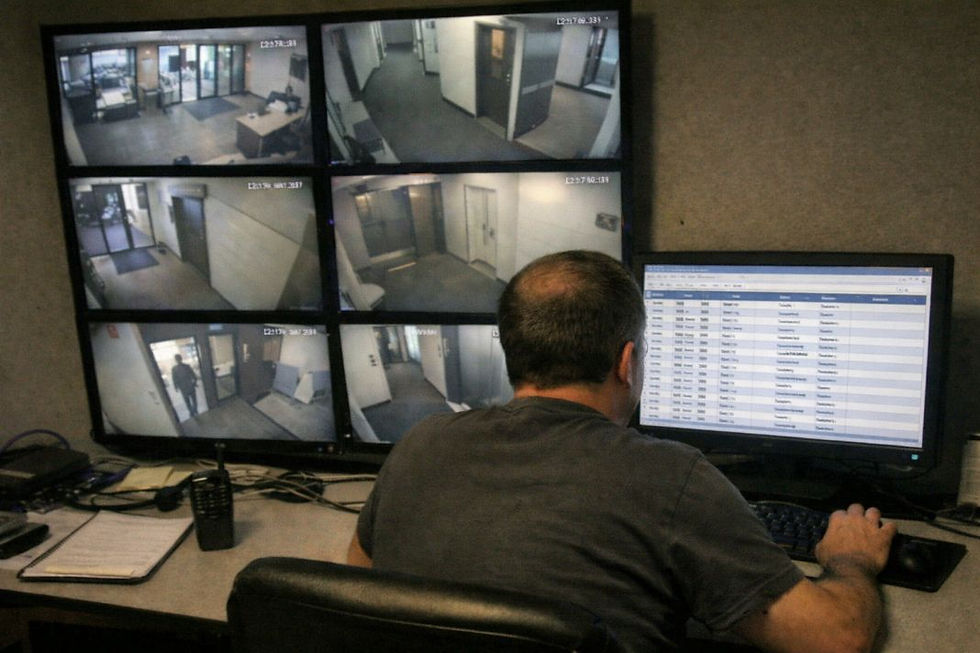
Surveillance coverage Check for blind spots in CCTV placement or outdated systems that reduce visibility.
Reception and front-of-house presence Unstaffed or intermittently monitored entry points are easy targets for tailgating attempts.
Visitor sign-in procedures A lack of checkpoints or ad-hoc visitor policies leave gaps for unauthorised persons to exploit.
Human behaviour and tolerance breaches Many incidents stem from employees holding doors out of politeness or avoiding confrontation.
Building access logs Audit door activity data to identify irregular usage or repeated entries outside of standard hours.
These assessments are usually most effective when carried out alongside facilities management teams or during planned security audits. Vigilance begins with visibility.

Strengthening Physical Access Controls
Physical controls provide the most tangible barrier to unauthorised access. They do not eliminate risk entirely, but they significantly reduce opportunity.
Consider these options:
Turnstiles and speed gates These restrict access to one individual at a time, typically requiring swipe access to operate. Best suited for main lobbies or ground-floor receptions.
Interlocking doors or mantraps These systems allow only one door to open at a time, ideal for secure zones or data-sensitive rooms.
Security-controlled doors with biometric access Fingerprint or facial recognition tools can prevent shared-card use. Practical for high-security environments.
Upgraded locking mechanisms Fail-secure door hardware helps ensure that, during an emergency or capability failure, doors do not default open.
Integrated visitor management systems Synced with access controls, these streamline check-ins while maintaining control over building access permissions.
Physical security must balance function and flow. Overly restrictive systems can impede daily operations or cause employee frustration. Therefore, the goal is not to create friction, but to guide appropriate access with intelligent infrastructure.
Deploying Trained Security Officers at Key Points
Security officers provide what systems cannot: judgement, adaptability, and real-time assessment. Their presence at building entrances, receptions, or loading bays serves as both deterrent and safeguard.
Key roles include:
Monitoring behaviour and credentials Trained officers can observe body language, verify ID protocols, and intervene appropriately if something is amiss.
Supporting reception environments In mixed-use or high-visitor areas, professional officers improve visibility and offer reassurance while blending with front-of-house teams.
Responding to incidents Whether a suspected breach or a safety concern, officers provide immediate escalation and containment where required.
Conducting spot checks or pass verifications These measures help reinforce policies and remind occupants of security expectations.
Site-specific deployment is important. At Fahrenheit Security, professional guarding solutions are designed around the actual usage patterns of each site. Security presence is customised to complement both the risk profile and the workplace culture.
Implementing Anti-Tailgating Technology
Technology can support human oversight by identifying or preventing tailgating events as they occur.
Useful systems include:
Infrared or beam sensors Installed at doors or turnstiles, these detect multiple entries per authorised swipe. Best used when enforcement relies on early detection.
Mantrap chambers with dual-door logic These physically prevent tailgating by allowing only one person entry at a time. Best used in secure areas where throughput volume is low.
Access control linked to occupancy tracking These monitor how many people are in a certain zone and flag any mismatches. Best used in buildings with fluctuating access needs.
Real-time entry alerts Integrated with CCTV and analytics, these assess patterns such as repeated badge use or tailgating flags. Best used where monitoring teams are in place.
Dual-authentication systems Requiring a second verification layer, such as pin plus card. Best used when identity assurance is important.
These tools strengthen perimeter control but should not replace human oversight. Effectiveness depends on correct placement, proper configuration, and active monitoring.
Training Staff to Recognise and Prevent Tailgating
Security culture begins with people. Even with systems in place, employees may unintentionally allow breaches out of habit or uncertainty.
Common risk behaviours include:
Holding the door open for unknown individuals
Allowing colleagues to enter on a single badge scan
Hesitating to challenge tailgaters due to social discomfort
Training can address these tendencies by reinforcing awareness and giving clear guidance.
Focus areas should include:
How to recognise suspicious behaviour This includes loitering near entrances, evading ID systems, or appearing unfamiliar.
How to challenge politely and safely Phrasing such as “Could I see your access pass, please?” can be both courteous and assertive.
Clear explanation of access policies Employees should know their own permissions and why exceptions are a risk.
When and how to report Easy-to-access contact points or on-site escalation channels prevent uncertainty.
Reinforcement through signage, internal campaigns, and onboarding sessions helps keep the topic present. Regular refreshers are more effective than one-off modules.
Establishing Clear Access Policies and Enforcement Protocols
A consistent policy defines expectations. Without it, even the best controls fall short.
An effective access control policy should include:
Defined access permission levels Specify who can enter which zones and when.
Visitor management protocols Set procedures for hosting guests, including check-in, badge allocation, and escort requirements.
Enforcement measures Clarify the consequences of policy breaches, whether accidental or deliberate.
Clear signage and communication Use visible guidelines at entry points to reinforce expectations without ambiguity.
Ongoing audits and accountability Ensure logs are reviewed and any irregularities followed up promptly.
Enforcement is not purely punitive. It should be framed around the collective responsibility to maintain a safe and secure environment. Security officers play a key role in enforcing these policies with professionalism and discretion.
By combining well-defined rules, trained personnel, and intelligent infrastructure, office buildings can meaningfully reduce the risks of tailgating and unauthorised access. Effective prevention is achieved not by isolated actions, but by joined-up systems working in alignment.




Comments