
Winter Security Risks for Retail Businesses and How to Handle Them

Updated: 3 days ago
What security problems does winter bring for your shop?
Darker evenings, icy entrances, busy Christmas crowds and longer closures over the holidays are the main winter risks for shops. You can manage them with good lighting, clear walkways, more watchful cover at peak times and checks on the building while it is closed.
From November to January most shops trade in the dark for part of the day, hold extra stock and see far more customers. Each of these changes puts pressure on your normal routines, and gaps in security tend to open up when routines slip.
Winter darkness and retail security
With earlier sunsets, your shop front, car park and service yard can be dark while you are still trading. Poor light gives cover for theft and vandalism and makes it harder for shop workers to see what is happening outside.
Keep the shop well lit inside and out, and fit motion-sensor lights at entrances, exits and the back door. Good lighting also helps your CCTV record clear pictures.

Slips on icy and wet floors
Wet shoes and icy pavements bring more slips at the door in winter. Grit outside paths before you open, put large absorbent mats inside the entrance and use wet floor signs while you mop.
Check the entrance several times a day in bad weather, because mats soak through and need changing. A security officer on the door can spot and report hazards like these as part of their patrols.
Do busy Christmas crowds lead to more theft?
Crowded aisles, long queues and busy shop workers give shoplifters more cover. The BRC Crime Report 2026, from the British Retail Consortium, found that customer theft makes up the majority of recorded crime against retailers, and that organised criminal groups are behind repeat offending.
Keep high-value stock away from the doors, put security signs where customers can see them and brief shop workers on what to watch for at peak times. Visible retail security guards at the entrance deter many thieves before they start.
Is abuse against shop workers still common?
The same BRC report found that violence and abuse against shop workers fell from 2,000 incidents a day to 1,600 in the year to August 2025. That is still far above the 455 a day recorded in 2019 to 2020, before the pandemic.
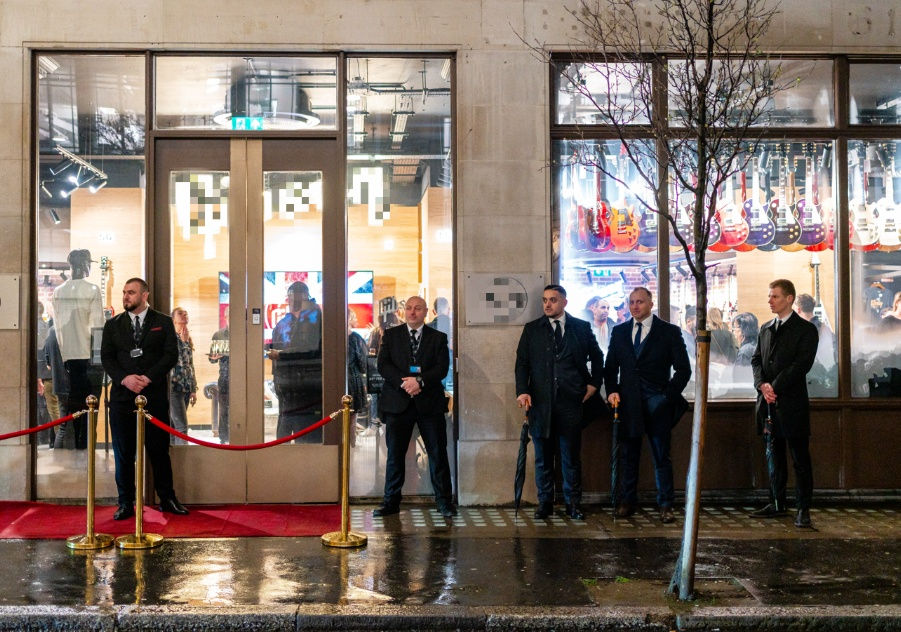
Tired customers and long queues can lead to arguments in winter. A calm security officer near the tills can step in early, and a clear plan for calling the police helps shop workers feel supported.
Power cuts and alarms

Winter storms can cause power cuts that take alarms, CCTV and electronic locks offline. A backup power supply, often called a UPS (uninterruptible power supply), keeps these systems running until the power comes back.
Agree who will check the building if the alarm goes offline out of hours, and keep their details by the alarm panel. A key holding and alarm response service can cover this if nobody local can attend.
Where security guards help most in winter

Entrances and exits: A security officer at the door deters theft and gives customers a friendly welcome.
Warning signs: Security officers watch for people who linger, return several times without buying or work in pairs to distract shop workers.
Crowds and queues: They help keep queues orderly and doorways clear on the busiest days.
Closing checks: At closing time they check doors, windows and stockrooms before the alarm is set.
Fahrenheit Security focuses on retail guarding in busy, higher-risk settings such as flagship stores and prime shopping streets. We plan each store's cover around its own layout, stock and trading hours.
Static guards during closures

A static guard is a security officer based at one point in the store, such as the main entrance or a high-value counter. Their steady presence deters theft and gives shop workers someone to call on straight away.
Over the Christmas and New Year closures, an empty shop can sit unwatched for days. A static guard or regular mobile patrols can check the building, the shutters and the alarm while you are closed.
Adapting patrols to winter conditions
Icy ground: Wear footwear with good grip and report icy spots so they can be gritted.
Heating and power: Check heating and electrical systems on patrol and report faults early.
Patrol routes: Plan routes around unlit or icy areas while still covering the whole site.
Cold weather: Wear warm layers and waterproofs to stay alert outdoors.
Common questions about winter retail security
Do you need extra security over Christmas?
Yes, many shops add cover for late opening, the busiest weekends and the January sales. Look at your past incident logs to see which days and areas need it most.
Can security guards detain a shoplifter?
No, security officers have no police powers to detain people. They can refuse entry, ask a person to leave, record what happened and call the police.
Should you report every shoplifting incident?
Yes, report every incident to the police, even when the value is small. The BRC asks retailers to report all incidents so the police get the full picture of crime in each area.
What should a winter security plan cover?
A winter security plan should cover lighting, slips at the entrance, peak trading days, power cuts and the Christmas closure. Write down who does what for each, including who opens up, who locks up and who answers an alarm call.


Comments