Should you change the locks when you move into a new home?

Should you change your locks after moving into a new home?
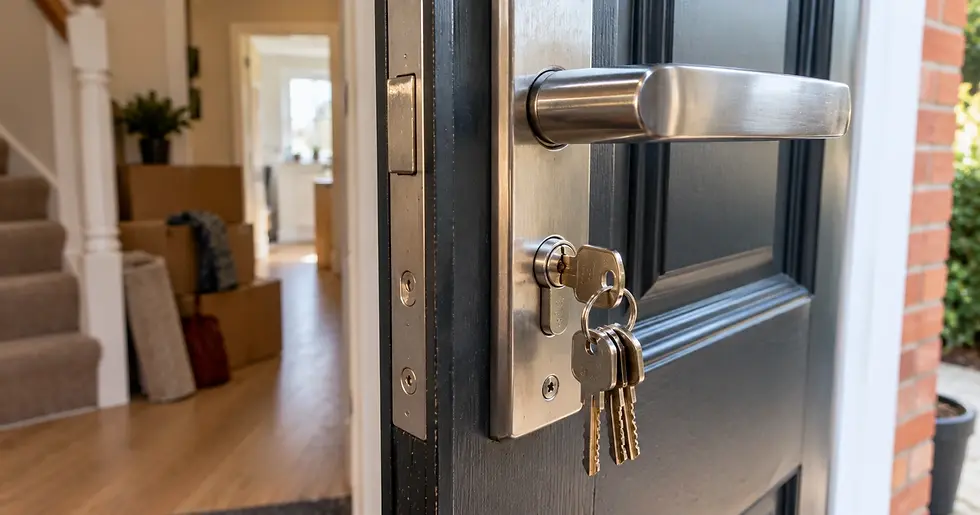
Yes, you should usually change the locks after moving into a new home, especially on the main external doors. The useful question is who might still have working keys, then which doors give real access to your property, garden, garage or shared residential areas.
Moving home gives you ownership or possession, but it does not give you a perfect history of every key. A previous occupier may have been careful, yet spare keys can pass through cleaners, contractors, relatives, estate agents or neighbours over time.
We look at a new home lock change as a proportionate security reset. In a straightforward house move, that may mean replacing the main external locks. In a high-value home, flat or managed building, the sensible answer may also include fobs, shared doors and visitor routes.
Insurance deserves a calm check, too. Some policies refer to lock types or minimum security standards, so read the wording before assuming the answer is either harmless or disastrous.

Changing locks resets key control
On completion day, the keys are handed over, but you cannot audit every copy that has ever existed. That is the point most moving-house advice misses. A lock change is an access control reset, not just a moving-home chore.
At Fahrenheit Security, we treat key control after moving home as a practical management issue. The concern is uncertainty around access, and nobody needs to accuse a previous occupier of planning to misuse an old key. Once you accept that, the decision becomes calmer and sharper: which entry points still accept keys you cannot account for?
Renovation work changes the timing. If builders, decorators or other trades will need keys during the first stage of ownership, changing locks immediately and then handing out new keys can defeat the purpose. In that situation, we usually prefer a temporary working arrangement during the works, followed by the final lock change once contractor access has ended.
Policy wording also matters. Avoid the easy claim that cover is automatically lost if you do nothing; the proper check is whether your policy names lock standards, key loss, unforced entry or security conditions. Once that is clear, the next decision is which doors actually control access to the home.
Start with the doors that control access
External access points come first because those are the doors an old key could still open from outside. Internal locks only deserve attention where they protect a separate flat, a locked room with valuable contents or a space with its own access risk.
Main entrance. Start with the front door because it is the route most people use and the one most likely to have had keys issued to others.
Rear and side doors. A back door, side gate door or garden entrance can matter as much as the main door if it gives direct access into the property.
Patio doors and linked garages. Treat any door from a garage, terrace or private garden as part of the same access check. A front door lock change leaves a gap if the old garage key still opens into the house.
Communal routes. In flats and managed residential buildings, check what private locks you control and what sits with the building manager, concierge or managing agent.
Internal locks with a clear purpose. Change these selectively, such as a private office, secure store or separated living area. Changing every internal lock by default adds cost without always adding much control.
Modern multi-point doors need proper use as well as the right replacement lock. On uPVC and similar doors, simply pulling the door shut is insufficient because the hooks and latches engage properly when you lift the handle, turn the key and remove it. Police.uk summarises this as “lift, lock and remove”, which is plain advice worth following every day.
Door construction sets the lock standard
A uPVC front door in one home and a solid timber entrance door in another may both need attention, yet the correct replacement can be completely different. The right replacement depends on the door and lock type, not just the address you have moved into.
The table below compares common door situations with the lock standard or lock type to ask about.
Door or situation | Lock standard to ask about | Why it matters |
|---|---|---|
uPVC or composite door with a euro cylinder | TS007 3 star rated euro cylinder | Police.uk advises this type when changing door locks because it protects against snapping, drilling and bumping. |
Solid timber external house door | Kitemark 5 lever mortice deadlock to BS 3621:2017+A1:2024 | This is the current precise BS 3621 designation for a key-operated, thief-resistant single-point lock locked from both sides with a key. |
Solid timber flat entrance door or converted property door | BS 8621:2017 deadlock with internal thumb turn | ProtectUK advises this arrangement for flats and similar doors because it combines secure outside resistance with keyless exit from inside. |
Plainly, a replacement barrel on a uPVC door is a different job from fitting or replacing a mortice deadlock on a timber door. If you ask only for “a new front door lock”, you may get a basic swap that fits the door but misses the standard you actually wanted.
Flats need a further check. A key-operated deadlock can be suitable for some timber house doors, but a flat entrance may need internal escape without a key. That is why BS 8621 matters in the right setting, especially where you need security from outside and a safe way out from inside.
Rented homes and flats need permission checks
When the property is rented, leasehold or part of a managed building, the lock decision also has a permission layer. The aim is still sensible control of access, but the route depends on who owns the door, who manages shared areas and what your agreement allows.
Owner occupied homes
For an owner-occupied house, the main concern is practical control of private entry points. We start with the external doors, then linked garages, garden access and any private outbuilding that creates a route back into the home.
Where the property is part of an estate or gated setting, private locks are only one part of the picture. Shared gates, entry systems and visitor arrangements can leave access gaps even after your own front door has been changed.
Rented homes
Renters should read the tenancy agreement before altering locks. A landlord or letting agent holding a key does not give them open access whenever they choose, but the agreement may still set rules around changes to the property.
Our advice is simple: separate the security concern from the permission check. Unknown keys are a valid issue after a move, and a managed process avoids turning a sensible lock change into a dispute about alterations.
Leasehold flats and managed buildings
Leasehold flats bring private and shared access together. Your flat entrance lock may be yours to deal with, while communal doors, access fobs, concierge procedures and building systems sit with the managing agent or freeholder.
Residential property managers and estate managers in Greater London also need records to stay tidy. If fobs, keys or contractor access are issued through a central desk, the lock change should fit that building process so old access is removed in the right place.
Judge the wider risk after the locks
A standard house move may be resolved by changing the right locks properly and keeping a clear record of who now has keys. The calculation changes for a Central London flat with concierge access, a high-value home with contractors coming in, or a residential building where private doors and shared entry routes overlap.
Price gives you a useful sense check. The Master Locksmiths Association’s 2026 guide puts changing a standard euro cylinder lock on a uPVC door from £105 including VAT, with anti-snap euro cylinders and mortice locks starting higher. Treat that as a ballpark figure for early budgeting, because it helps you question an unusually vague or very low price.
Provider choice matters because the person changing the lock is being trusted with access to the home. The Master Locksmiths Association says locksmith prices vary because there is no government licensing for locksmiths, and it recommends getting at least three local quotes. For a valuable home, clarity about price, identity and the exact lock being fitted is basic discipline.
At Fahrenheit Security, we look beyond the lock cylinder when the property profile calls for it. Residential security for a new home can include how visitors are handled, where guards or security officers fit into a building, and whether reception or concierge arrangements control access properly. In managed residential settings, a neat front door lock change can still leave shared routes unresolved.
Once you see the move as control of access, the question changes: old keys, weak doors and unmanaged shared routes stop being vague worries and become specific checks you can close off in order.

Questions we get asked about changing locks after a move
Should you keep spare keys with a neighbour after moving in?
You can, but choose one trusted key holder and keep a clear note of who has a copy. Key control becomes weak when spare keys are handed out casually and no one knows where they ended up.
Can several external doors use the same key?
Some homes can be set up so several compatible locks use one key, which can make daily use simpler. Balance that convenience against the fact that losing one key may then affect more than one access point.
Do smart locks remove the need for good physical locks?
A smart lock still depends on the strength of the door, the fitting and the physical lock components behind it. Treat smart access as one layer of control, then check the door and lock standard in the normal way.
What paperwork should you keep after a lock change?
Keep the invoice and any details showing the lock type or standard fitted. Those records help if you later need to check insurance wording, manage a tenancy issue or brief a residential property manager.
What should you do if a key goes missing during the move itself?
Treat it as a live access problem rather than a mislaid item. Removals day involves multiple people and open doors, so a key that cannot be accounted for by the end of the day is a reason to bring the lock change forward.


Comments