Does your shop need extra security during summer festivals?

Does your shop need extra security during summer festivals if trading usually runs smoothly?
In many cases, yes, at least for a short period and only if local festival activity changes your usual risk level. Summer events can bring heavier footfall, longer trading hours, distracted customers, crowd pressure outside the shop, and a higher chance of opportunistic theft or disorder, so the right decision depends on your location, stock profile, layout, and existing security arrangements.
Understanding the Summer Festival Security Landscape
A normal summer trading day and a festival day can look very different from the pavement in front of your shop. Streets become busier, customer flow becomes less predictable, and nearby public spaces may attract large groups before, during, and after scheduled events.
Regular patterns often disappear. A shop that usually sees steady lunchtime trade may suddenly deal with crowd surges, queues at the till, people sheltering near the entrance, and customers arriving in larger groups. Local authorities, event organisers, and the Metropolitan Police may publish road closures, crowd routes, or timing updates, but those changes still need to be translated into practical decisions on the shop floor.
Several risk shifts tend to happen at once:
Footfall increases, which can make suspicious behaviour harder to spot.
Crowd management outside the premises may affect entrances, exits, and sightlines.
Event schedules can extend busy periods well beyond normal peak hours.
Public disorder or anti-social behaviour may rise in areas with alcohol sales nearby.
A common mistake is to assume festival retail risks begin only after dark or only once crowds become rowdy. In practice, shop crime during festivals often takes the form of quick, low-level opportunism in broad daylight, including distraction theft, concealed shoplifting, and attempts to exploit busy service points.
Key Security Risks Shops Face During Festivals
Festival periods change the mix of threats more than many retailers expect. Some risks become more frequent, while others become easier to carry out because attention is split between customers, stock, and activity outside.
Opportunistic shoplifting
Heavier footfall creates cover. Small items near entrances, promotional displays, and high-demand products are often more exposed when security sightlines are interrupted by crowds. Festival shoplifting risks rise further if team members are pulled into queue management or customer enquiries.
Distraction theft
One person asks for help, another moves into a blind spot, and stock disappears in seconds. Busy trading conditions make these incidents easier to stage, particularly in shops with narrow aisles, multiple access points, or limited supervision near fitting rooms and display tables.
Disorder linked to intoxication
By late afternoon or evening, some areas see a clear shift in behaviour. Raised voices, refusal to leave, aggressive complaints, or damage to displays can all become more likely if the local event draws drink-led crowds. Local business improvement districts and retail crime prevention partnerships often see this pattern during large public events.
Group theft
Some incidents are coordinated rather than spontaneous. A group may enter together, spread across the store, draw attention in one area, and remove goods from another. These tactics place obvious pressure on loss prevention, especially in stores with open-plan layouts.
Pressure at the entrance
Crowd surges outside the premises can create safety and security issues even if no crime occurs inside. Customers may struggle to enter or leave comfortably, doorways can become informal meeting points, and security concerns can escalate quickly if queues build near tills or thresholds.
The point is not that every festival causes serious retail crime spikes. The point is that festival crowd safety and shop security threats often arise from changed conditions, not from the event itself.
Assessing Whether Your Shop Needs Extra Security
A sensible shop security assessment starts with context, not assumptions. Some retailers need visible extra cover during festival weekends, while others may only need tighter routines, adjusted staffing, or better use of existing systems.
Look at where your shop sits in relation to the event. A store on a direct pedestrian route faces different pressure from one a few streets away. Proximity to transport hubs, food stalls, bars, public toilets, or temporary road closures can all affect retail vulnerability. A small boutique beside a busy station exit may face more disruption than a larger store in a quieter side street.
Check the event pattern, not just the date. Trading risk depends on start times, finish times, likely crowd build-up, and dispersal periods. Local councils and event organisers often publish schedules that show when roads close, when access changes, and when local footfall is likely to peak.
Consider what you sell and how it is displayed. Premium goods, small high-value items, and products kept near the front of the shop all deserve closer attention. A convenience shop, cosmetics retailer, fashion store, and electrical retailer each face different seasonal security challenges during a large local event.
Review what already exists. If your CCTV coverage is strong, your entry point is well managed, and your current team can maintain clear observation during busy periods, extra deployment may be limited. If your usual arrangement already feels stretched on ordinary Saturdays, festival pressure may expose that weakness quickly.
Think about trading hours and staffing gaps. Extended opening, breaks, shift changeovers, and late-evening fatigue all affect incident response. Short periods of lower supervision often matter more than the full day on paper.
Risk evaluation works best when shop management teams use real trading patterns instead of broad assumptions. A calm review of location, merchandise, layout, and timing usually gives a clearer answer than a general sense that the area will be busy.

Options for Improving Shop Security During Festivals
Extra security does not always mean a heavy response. Good festival security measures match the environment, the stock risk, and the customer profile.
Professional security officers
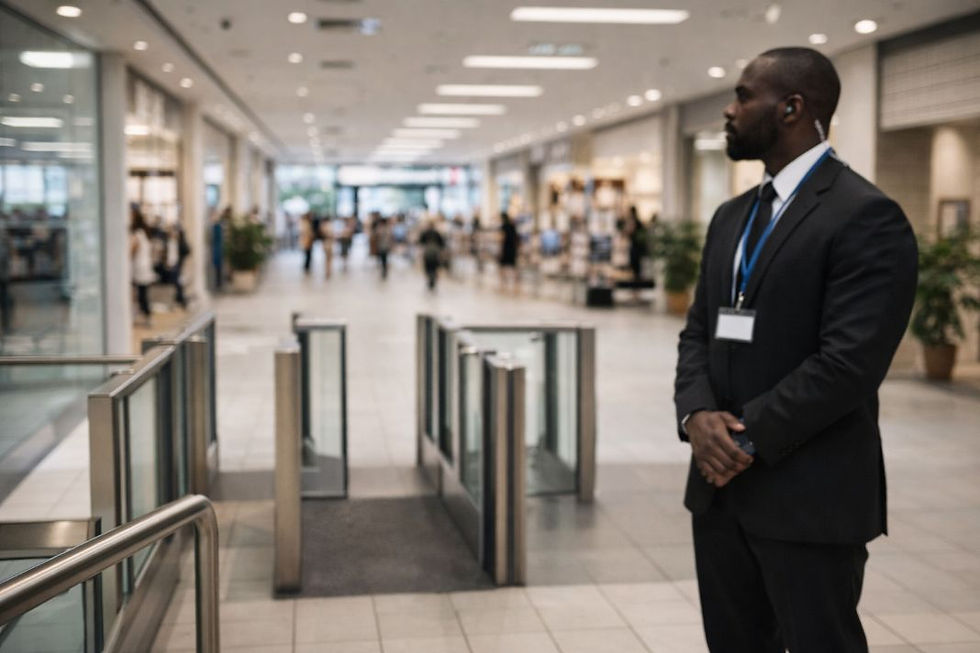
A visible, customer-facing officer can deter theft, monitor entry points, and step in early if behaviour starts to deteriorate. In high-footfall locations, that presence often matters most near entrances, premium displays, and payment areas. Providers such as Fahrenheit Security are often brought in for this kind of short-term retail cover where presentation and situational awareness both matter.
Adjusted routines inside the shop
Sometimes the first improvement is operational rather than technical. Moving valuable stock away from the entrance, increasing floor presence at peak times, tightening fitting room checks, and changing break schedules can reduce exposure without altering the overall shopping experience.
Better use of CCTV and alarms
Technology supports observation, but it works best when someone is actively responding to what it shows. A well-positioned camera can help monitor blind spots and entrances, while alarm systems remain useful after hours if festival activity continues late into the evening. CCTV monitoring centres may also support wider site awareness where multiple premises are involved.
Liaison with local partners
Shops in busy districts often benefit from sharing information with local police, nearby retailers, event organisers, and local authorities. Timing updates, crowd route changes, and area-specific concerns can all affect deployment choices on the day.
Some retailers need only a temporary visible deterrent. Others need a fuller mix of officer deployment, access control, and tighter in-store discipline because the pressure point sits both inside and outside the premises.
Balancing Security with Customer Experience
A shop can feel secure without feeling tense. During festival periods, the best customer-friendly security usually comes from officers and retail teams who stay alert, approachable, and calm in a busier setting.
Picture a crowded afternoon in a central shopping street. Customers are browsing, a queue is forming, and a group pauses near the entrance to get out of the sun. In that moment, an approachable security officer who greets people, keeps the doorway clear, and watches the wider flow can improve service as much as safety.
Retail management often gets better results from clear role definition than from simply adding more people. If a security operative is expected to deter theft, support de-escalation, guide customers, and communicate with supervisors, the presentation and communication standard need to match the environment. Fahrenheit Security, for example, operates in client-facing settings where conduct and awareness carry equal weight.
A few practical habits make a noticeable difference:
Keep officers visible, polite, and easy to approach.
Give store teams a simple escalation route for concerns.
Avoid clustering security presence in a way that blocks browsing.
Use calm language during incidents, especially near queues or entrances.
Customers generally respond well to security that feels competent and measured. A well-positioned officer near the entrance can reassure genuine shoppers, reduce friction around crowd movement, and prevent a busy trading period from feeling chaotic.
Common Misconceptions About Festival Security
Several festival security myths still shape poor decisions in retail. Most come from treating festival periods as either a major threat or no threat at all, when the reality usually sits somewhere in the middle.
Myth: Our shop has never had a problem, so the festival will not change much. Past calm does not guarantee low risk during a one-off local event. Temporary crowd patterns, altered access routes, and longer busy periods can create new openings for theft or disorder in an otherwise settled location.
Myth: CCTV alone is enough. Cameras can record, monitor, and support evidence gathering, but they do not physically intervene, guide customers, or calm a developing confrontation. Technology limitations become more obvious when the shop floor is busy and incidents unfold quickly.
Myth: Extra security always feels intrusive. Poorly placed or poorly briefed security can affect the atmosphere. Well-integrated cover usually does the opposite. Customers often feel more comfortable where entrances are managed sensibly and minor issues are handled early.
Myth: Festival risks are mostly about serious disorder. Much of the risk is lower level and more common, including distraction thefts, concealment, till pressure, and opportunistic behaviour near displays. Those losses can add up even in places that never face major confrontation.
Myth: Any visible officer can do the job. The human factor matters. Trained security officers who can observe behaviour, communicate clearly, and manage conflict without escalating it bring a different level of value from a simple static presence.
Those assumptions persist because many incidents look small in isolation. Taken together across a busy weekend, they often reveal where shop security misconceptions have been masking a very real operational issue.

Looking Beyond the Festival: Building Lasting Security Confidence
Festival periods often expose what a shop already handles well and where routines start to strain. That makes them useful testing points for long-term shop security, not just seasonal disruptions to get through.
A post-event review can be simple. Note the busiest hours, where supervision dipped, which displays were most exposed, whether entrance pressure changed customer flow, and how quickly concerns were spotted and managed. Even a short internal review can sharpen future planning for sales periods, local events, and bank holiday weekends.
Some temporary measures are worth keeping. Revised floor routines, stronger communication between shop management and security officers, better positioning near the entrance, or clearer escalation procedures can improve ongoing risk management long after the festival crowd has gone.
Security confidence grows from observation, adjustment, and consistency. A shop that learns from one busy summer event is usually better prepared for the next one, and better organised for the ordinary trading days in between.


Comments